


What Is Shadow Work? Why You Keep Repeating the Same Patterns (And How to Finally Break Free)
Why do you keep repeating the same patterns, even when you know better? The answer may lie in your shadow. In this guide, you'll discover what shadow work is, why unresolved beliefs and emotional wounds continue to shape your behaviours, and how a shadow work journal can help you uncover self-sabotaging patterns, heal limiting beliefs and create lasting personal growth.
You’re self aware, you know what you need to change and you’ve been doing the work - but why do you keep repeating the same mistakes over and over?
Have you ever caught yourself thinking:
"Why do I keep ending up in the same relationships?"
"Why do I know what I need to do, but never actually do it?"
"Why do I keep sabotaging myself when things are going well?"
"Why can't I seem to let go of the past?"
If this sounds familiar, you may think you’re lazy or lacking motivation...or maybe just broken?
Or perhaps you just haven’t dived deep enough yet to understand the why, behind your behaviour?
Shadow work has become one of the most talked about personal development practices in recent years - and for good reason. Unlike surface level self-help advice that focuses on positive thinking and productivity hacks, shadow work helps you uncover the unconscious beliefs, fears and emotional wounds that quietly shape your decisions every single day.
When you understand your shadow, you stop fighting yourself. Instead, you begin healing the parts of you that have been running the show all along.
What Is Shadow Work?
Shadow work is the practice of exploring the hidden parts of yourself that you've learned to suppress, reject or ignore.
It was originally discovered by Swiss psychiatrist Carl Jung.
The term "shadow" refers to the unconscious aspects of your personality that developed through childhood experiences, social conditioning, past relationships and emotional wounds. These hidden parts aren't always "bad."
They often include:
Fear of rejection
Fear of failure or success
People-pleasing tendencies
Perfectionism
Anger you've never expressed
Shame
Limiting beliefs
Hidden strengths you've been taught not to show
The shadow forms as a way to protect you.
As children, we quickly learn what is accepted and what isn't. Maybe you were praised for being "easy" and learned not to express your needs. Maybe you were criticised for making mistakes, so perfectionism became your way of staying safe…
Those coping mechanisms may have protected you then - but years later, they're often the very patterns keeping you stuck.
Why Do You Keep Repeating the Same Behaviours?
This is one of the biggest questions people ask during their personal growth journey.
You read the books, you listen to the podcasts, you know what you "should" do. So why do you keep ending up back where you started?
Because awareness alone doesn't rewrite subconscious programming. Most of our behaviours aren't logical - they're automatic.
If your subconscious believes:
"I'm not good enough."
"People always leave."
"Success isn't for people like me."
"If I set boundaries, people won't like me."
...your brain will constantly look for evidence to prove those beliefs.
This is why you might:
Stay in unhealthy relationships.
Avoid opportunities.
Procrastinate on your goals.
Struggle with confidence.
Feel anxious even when life is going well.
Keep repeating the same emotional cycles.
You're not consciously choosing these behaviours. Your subconscious is trying to keep you safe based on stories it learned years ago.

Your shadow isn’t something to fear, embracing it will help you uncover what’s really holding you back.
The Hidden Cost of Avoiding Your Shadow
Many of us spend years trying to outrun discomfort.
We stay busy.
We distract ourselves.
We overwork.
We scroll.
We overthink.
We convince ourselves that once we achieve the next goal, we'll finally feel enough.
But unprocessed emotions don't just disappear…
They often show up as:
Chronic anxiety
Burnout
Low self-worth
Emotional reactivity
People pleasing
Perfectionism
Self-sabotage
Difficulty trusting others
Feeling disconnected from yourself
Until you understand what's underneath these behaviours, they tend to repeat themselves in different forms.
Why Shadow Work Is So Effective
The reason shadow work feels so transformative is because it focuses on the root cause - not just the symptoms.
Instead of asking: "How do I stop procrastinating?"
Shadow work asks: "What am I afraid will happen if I succeed?"
Instead of asking: "Why can't I say no?"
It asks: "When did I learn that my worth came from making everyone else happy?"
Instead of trying to force new habits through willpower, shadow work helps you understand why the old habits exist in the first place.
Once those unconscious beliefs become conscious, they lose much of their power. That's where real change begins.
Signs You Might Benefit From Shadow Work
Shadow work isn't only for people who have experienced major trauma. It's for anyone who feels like they've outgrown their current patterns but don't know how to move forward.
You may benefit from shadow work if you:
Keep repeating the same relationship patterns.
Feel stuck despite working on yourself.
Struggle with self-worth or confidence.
Constantly seek validation from others.
People-please at your own expense.
Feel triggered by criticism.
Fear failure or success.
Overthink everything.
Find yourself reacting emotionally in ways you don't fully understand.
Feel disconnected from who you really are.
If you're nodding along, shadow work could be the missing piece in your personal growth journey.
How to Start Shadow Work
You don't need years of therapy or complicated techniques to begin.
One of the most effective ways to explore your shadow is through guided journaling. Writing slows your thoughts down and creates space to notice patterns you may never have recognised otherwise.
Instead of judging your reactions, you begin asking curious questions like:
Why did this situation trigger me?
What belief am I holding onto?
When did I first learn this about myself?
Is this belief actually true?
What part of me is asking to be seen?
Over time, these questions help you build greater self-awareness, emotional resilience and self-compassion.
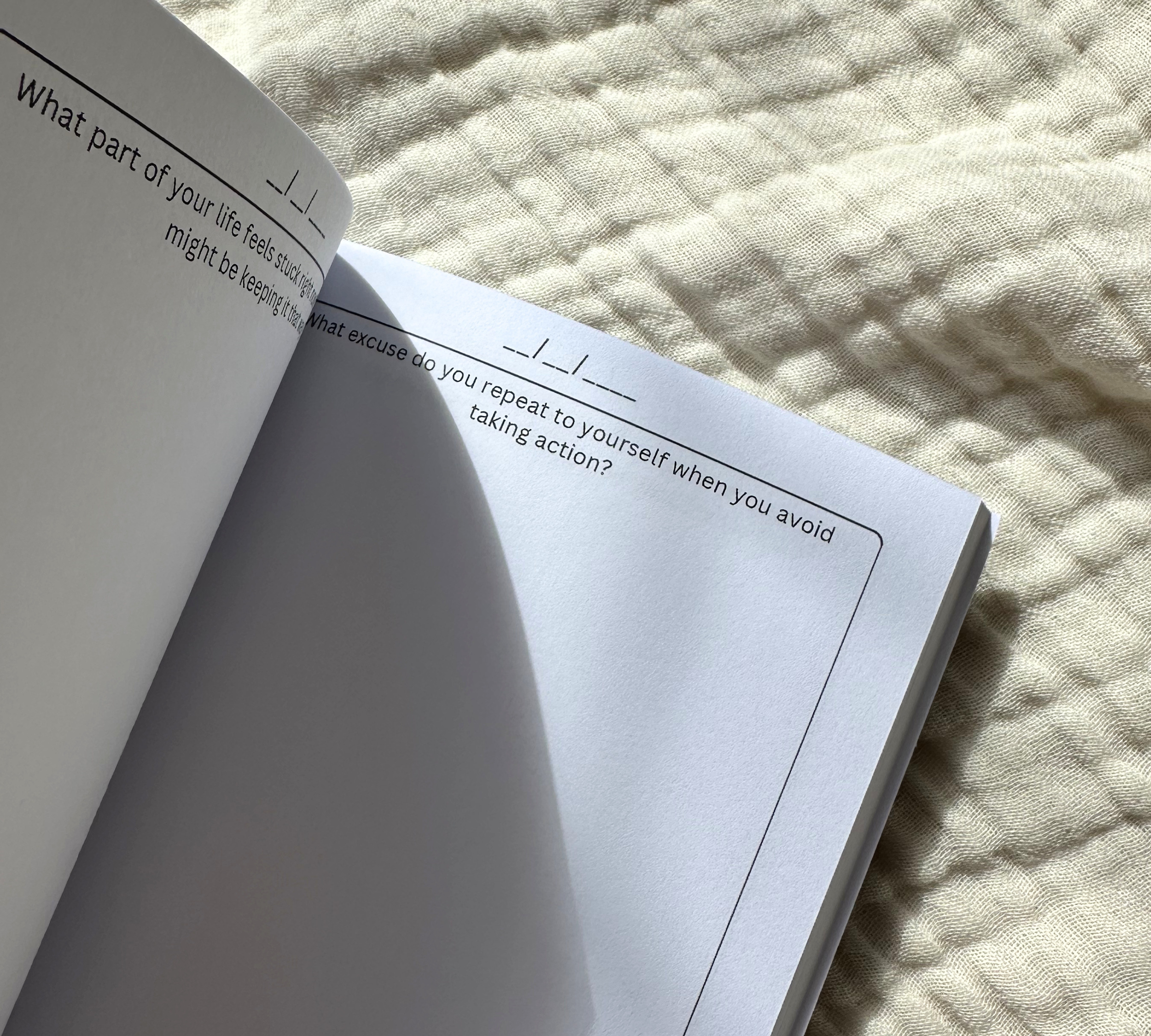
Shadow work doesn’t need to be complicated, you just need to be asking yourself the right questions.
A Shadow Work Journal Can Help You Go Deeper
Being self aware is a great first step. But transformation comes from doing the work consistently.
A guided shadow work journal provides structured prompts that help you uncover limiting beliefs, process emotions, identify self-sabotaging behaviours and create healthier patterns over time.
Rather than staring at a blank page wondering where to begin, you'll be guided through a step-by-step journey of self-discovery.
The goal isn't to "fix" yourself. It's to understand yourself.
Because when you understand why you think, feel and behave the way you do, you gain the power to choose differently.
Final Thoughts
The life you want isn't usually waiting on the other side of more discipline, more productivity or another motivational quote.
It's often waiting beneath the beliefs you've been carrying for years.
Shadow work invites you to stop running from the parts of yourself you've hidden away - and start listening to them instead.
The patterns you've been repeating aren't proof that you're failing. They're clues, and every clue is an invitation to heal.
If you're ready to move beyond self-awareness and into lasting transformation, our guided shadow work journal can help you uncover what's been holding you back - so you can finally create a life that feels authentic, aligned and truly your own.
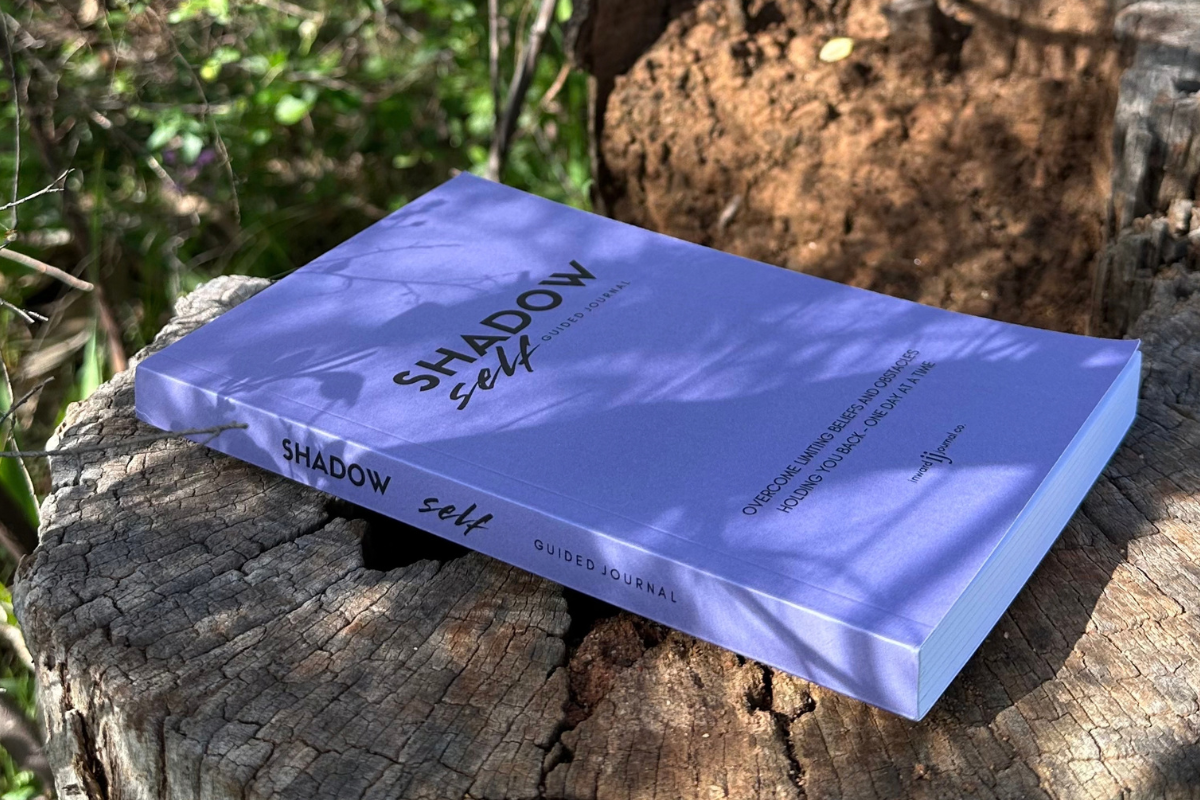
Shadow Self - Guided Journal is a shadow work journal designed to help you explore the hidden parts of yourself, uncover limiting beliefs, break unhealthy patterns and create a deeper connection with who you truly are.
This journal helps you:
Finally understand what’s holding you back.
Stop self sabotaging and shrinking yourself.
Heal emotional wounds and reconnect with your authentic self.
Overcome people-pleasing, perfectionism and fear of judgement.
Build deep self-awareness through guided shadow work journal prompts.
Heal inner child wounds, mild trauma and negative life experiences
Improve your mental health, resilience and mindset.
Perfect for anyone wanting to try shadow work prompts in a simple, easy to use journal that will actually help you move forward and grow.
Ready to finally make lasting change?
The Secret Signs of Burnout (That Most People Ignore) - And How to Escape the Burnout Trap
Burnout doesn’t always look like complete exhaustion…Sometimes it looks like constantly pushing through, feeling disconnected from yourself, losing motivation, struggling to relax or feeling emotionally numb while trying to keep up with everyday life. In this blog post, we explore the hidden signs of burnout, why so many people get trapped in survival mode, and how reconnecting with your needs, boundaries, and authentic self can help you begin healing from emotional exhaustion.
Burnout doesn’t always look like collapsing on the couch, crying in exhaustion or completely losing the ability to function. Many people are still able to show up, do their jobs, get through daily tasks and still seem like they have it all together. But the spark? It becomes dimmer each day... Most people think burnout is caused by working too much, but for me and many others, burnout appeared from how I was living my life - out of alignment from who I truly was.
Burnout can look like:
constantly being “busy”
saying yes to everything
pushing through exhaustion
feeling emotionally numb
being irritated by small things
struggling to switch your brain off
waking up tired no matter how much you sleep
For a long time, I thought burnout only happened to people who worked extreme corporate jobs or were physically overworked. I didn’t realise you could be functioning, socialising, showing up every day - and still be deeply burnt out underneath it all.
The truth is, burnout often builds slowly and quietly. You adapt to the stress until your nervous system starts treating overwhelm like your normal state.
And eventually, you stop feeling like yourself.
What Burnout Actually Feels Like
Burnout is more than being tired. It’s emotional exhaustion, mental overload and nervous system depletion that builds over time when stress outweighs recovery for too long.
One of the hardest parts about burnout is that many of the symptoms don’t immediately seem connected (and if you’re female, often brushed off when raised as a concern)
You may notice:
brain fog
irritability
lack of motivation
anxiety and spiraling thoughts
emotional numbness
trouble concentrating
feeling disconnected from yourself
constantly needing dopamine or distraction
struggling to enjoy things you used to love
Many people don’t realise they’re burnt out because they’ve become so used to operating in survival mode.
The modern world also makes it increasingly difficult to slow down, reflect and prioritise ourselves.
It’s Not Always From Working Too Much…
Working hard isn’t always the culprit.
One of the biggest contributors to burnout, especially for women is living a life that constantly goes against who you truly are. When you continuously ignore your own needs, suppress your emotions, people please, overcommit, or stay stuck in situations that don’t align with your authentic self, your nervous system remains in a constant state of stress.
Over time this causes emotional exhaustion because you’re spending so much energy performing, coping and surviving instead of feeling genuinely fulfilled or connected to yourself.
Many people experiencing burnout aren’t just overworked - they’re disconnected from their own identity, boundaries, passions, and emotional needs and the longer you abandon yourself to meet expectations or maintain a life that doesn’t feel right, the more mentally and emotionally draining everyday life becomes.

The Hidden Signs of Burnout
1. You Can’t Relax Without Feeling Guilty
Ever have a day off and think to yourself, “how much can I get done today?” Even when you finally sit down, your can probably think of other things on your list that need doing.
You feel like you should be:
doing something productive
replying to messages
cleaning
planning ahead
working on your goals
Rest starts to feel uncomfortable instead of restorative.
This is one of the clearest signs your nervous system is stuck in overdrive.
2. Small Tasks Feel Overwhelming
Burnout makes even simple things feel impossible.
Replying to emails, making decisions, cooking dinner, or running errands suddenly feels exhausting. Not because you’re lazy - but because your mental capacity is overloaded.
It can feel like you’re moving through quicksand for things that were once so easy to accomplish…
3. You’re Constantly “On”
Many people experiencing burnout become hypervigilant without realising it.
You may feel:
unable to switch off
emotionally reactive
overstimulated easily
exhausted by noise or social interaction
mentally alert even when physically tired
Your body never fully feels safe enough to actually rest.
4. You’ve Lost Connection With Yourself
This is one of the most overlooked symptoms of burnout.
You stop asking: “What do I actually want?”
Instead, life becomes about:
surviving the week
getting through the to-do list
meeting expectations
keeping everyone else happy
Over time, you can start feeling disconnected from your own needs, emotions, passions and identity.

Daily life is full of expectations, some placed on us and others we place on ourself - are we doing too much because we have to? Or is this something that can be challenged?
5. Everything Feels Like Effort
Things that once felt easy now feel draining.
You may notice:
low motivation, finding it difficult to start things
emotional numbness
difficulty feeling excited
lack of creativity
struggling to feel present
Burnout often steals your capacity to feel joy before it steals your productivity.
Why So Many People Stay Stuck In Burnout
The problem is that modern life often rewards burnout behaviours.
We praise:
overworking, staying late, going above and beyond
hustle culture
constant productivity
being available 24/7
pushing through exhaustion
social media consumption
Many people don’t slow down until their body forces them to. But burnout recovery isn’t just about taking a weekend off or having a self-care day.
It requires rebuilding your relationship with:
rest
boundaries
productivity
self-worth
your needs
nervous system regulation
How To Get Out of the Burnout Trap
1. Stop Treating Rest Like Something You Earn
Rest is not a reward for productivity. Your body needs recovery before it reaches breaking point.
Sometimes the most productive thing you can do is slow down enough to actually hear yourself think again.
And when I say rest - I don’t mean bed rotting and doom scrolling either.
Ways to rest without screens can look like:
reading a book
relaxing puzzles like jigsaws
a walk without your phone
sitting out in the sun enjoying a beverage
yin yoga
journal or creative writing
colouring book
2. Reduce Mental Clutter
Burnout thrives in mental overload. When your thoughts aren’t clear your brain can feel noisy and overwhelming. Thinking more doesn’t solve this.
One of the most helpful tools for burnout recovery is journaling because it helps move spiraling thoughts out of your head and onto paper. Doing a “brain dump” of everything that is on your mind can be really helpful in untangling what’s going on - and sometimes you realise you actually don’t have that much to worry about.
Brain dumping can help:
reduce overwhelm
improve clarity
calm racing thoughts
process emotions
create space mentally
You don’t need to write perfectly either - you just need to get it out of your head.
3. Start Paying Attention To Your Nervous System
Burnout is not just mental - it’s physiological and your nervous system may be stuck in a constant stress response.
Simple practices can help regulate your body again:
walking without your phone
deep breathing
quiet mornings
less multitasking
reducing overstimulation
spending time offline
journaling before bed
Recovery often begins with creating moments of safety and slowness.
4. Reconnect With Yourself Slowly
Burnout disconnects people from their identity. For me personally, I slowly lost who I was and am still rebuilding a sense of self years later.
Start asking yourself:
What genuinely makes me feel calm?
What drains me?
What do I need more of?
What am I constantly ignoring?
What would life feel like without constant pressure?
You don’t need to reinvent your life overnight either.
Small moments of self-connection matter more than dramatic, unsustainable changes.
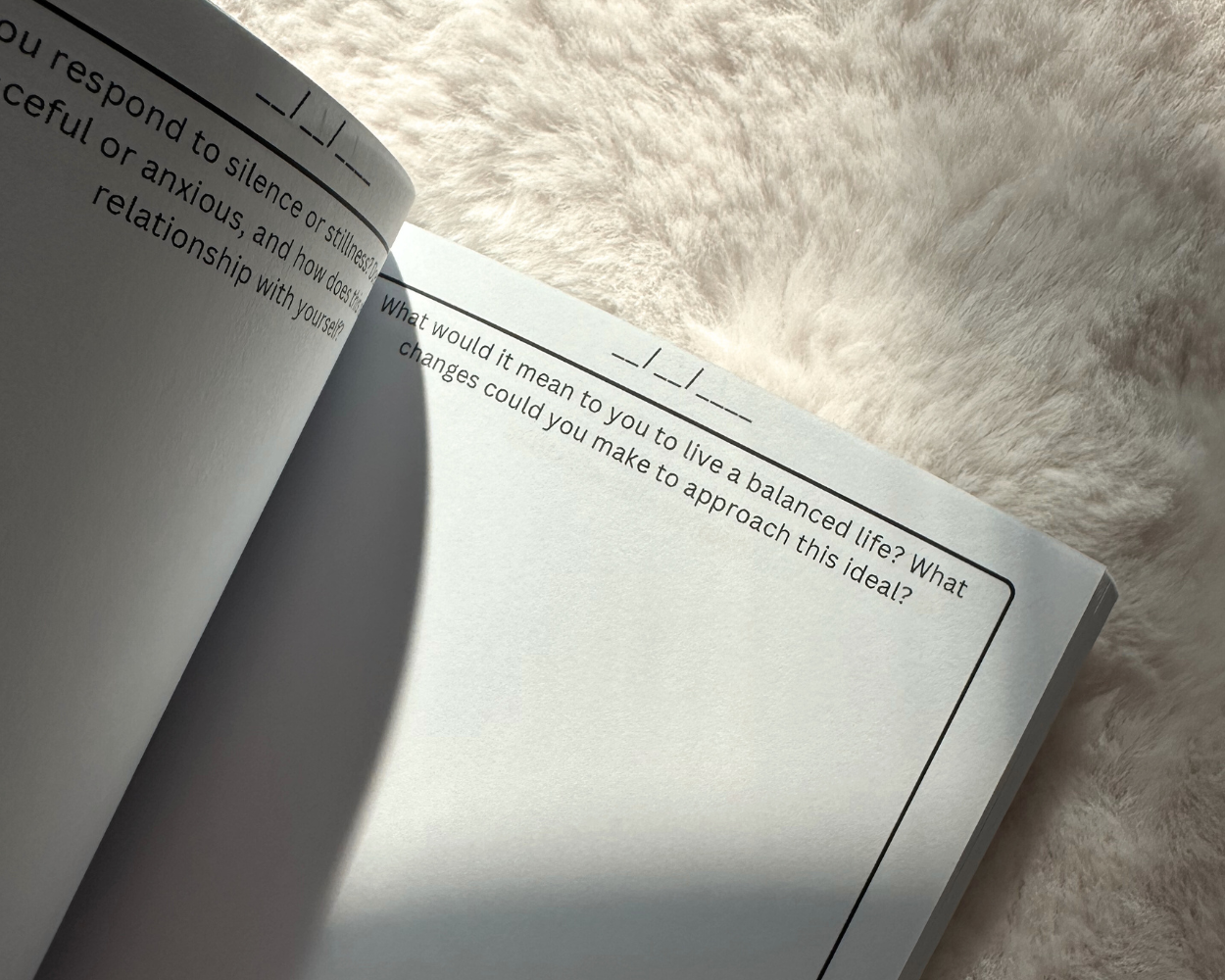
Journaling is an effective way to not only reconnect to yourself, but is a restful, stress relieving activity that can help in your burnout recovery.
5. Learn That Your Worth Is Not Based On Productivity
This is often the deepest layer of burnout.
Many people(especially women) tie their self-worth to:
achievement
being needed
staying busy
helping everyone else
constantly doing more
But constantly proving your worth through exhaustion eventually will catch up with you.
Tools for Actually Overcoming Burnout
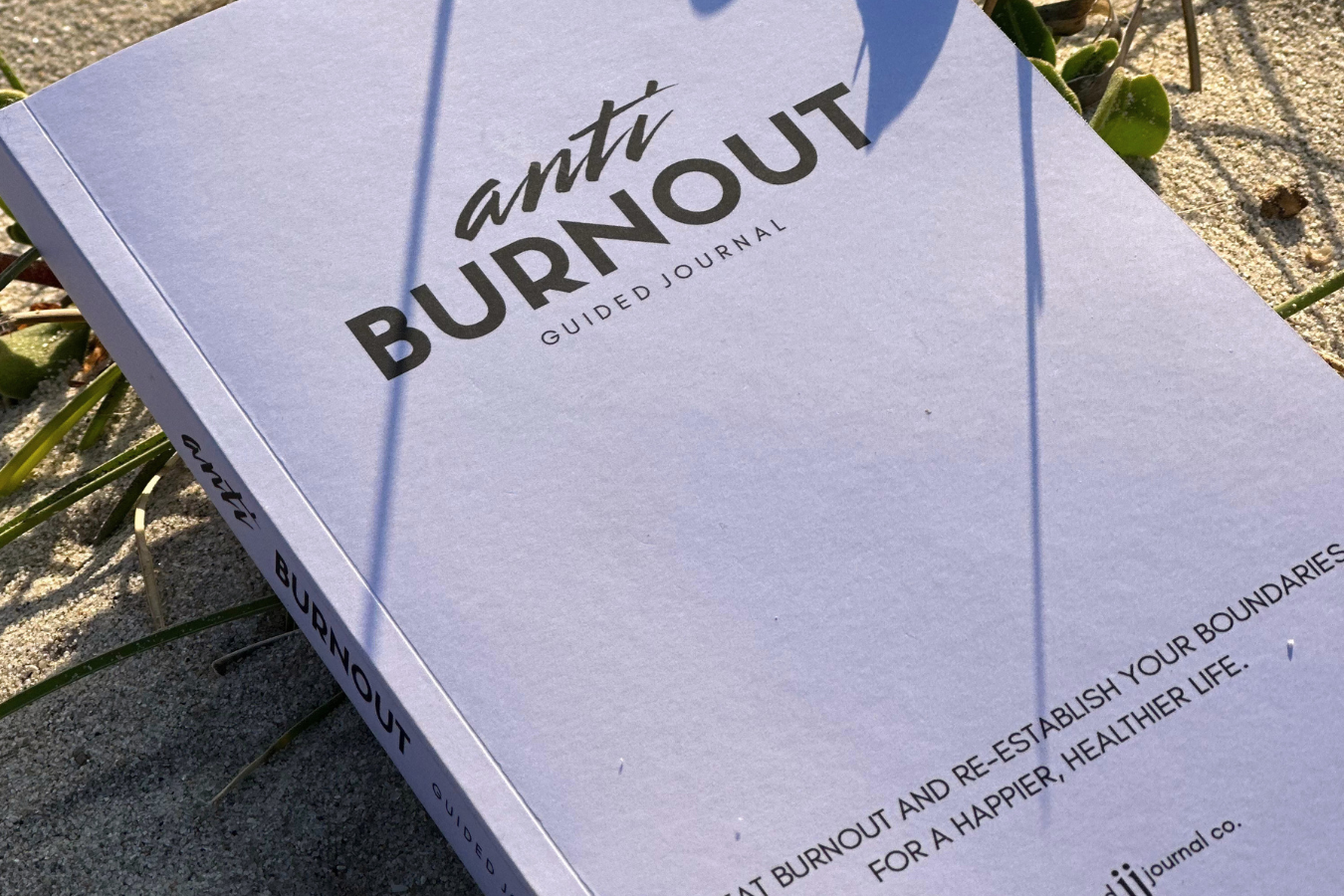
If you’re searching for an effective tool for helping burnout that’s not just a band-aid solution - the Anti Burnout - Guided Journal is full of guided journal prompts for self discovery, reconnection, boundaries, growth and healing.
It was carefully created with a few key topics in mind:
It helps you reconnect to yourself and what truly brings you joy - with self discovery and reflection journal prompts.
It helps you identify area’s of energy depletion so you can be more mindful of how you spend your time.
It helps you identify where you need to create or strengthen your boundaries to protect your peace.
It helps you build better habits and routines that support your mental and physical health.
It helps you understand burnout and which area’s of your life need more balance and attention.
You can overcome this, and you can feel better - you just need a place to start.
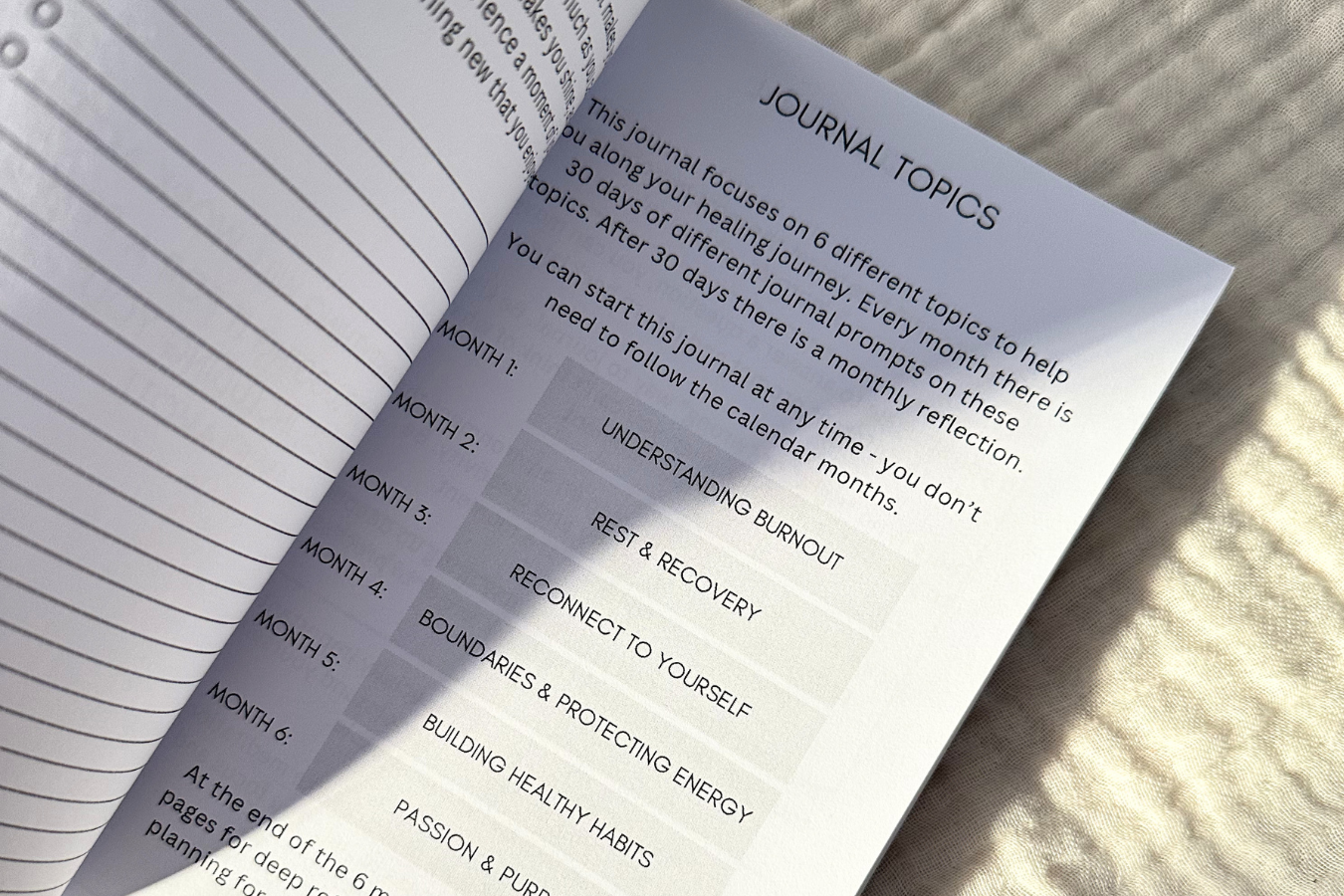
The 6 topics inside the Anti Burnout - Guided Journal by inward journal co, a guided journal packed full of effective journal prompts for burnout recovery, inspired by my own healing journey.
Final Thoughts
Burnout doesn’t always announce itself loudly - it quietly steals your energy, joy, motivation and sense of self until surviving becomes your normal.
Healing from burnout isn’t about becoming a “better” or more productive version of yourself, it’s about rebuilding a life that actually feels sustainable.
A life where your nervous system is not constantly overloaded.
A life where you feel connected to yourself again.
And sometimes, that recovery starts with something as simple as slowing down long enough to listen to what your mind and body have been trying to say all along.
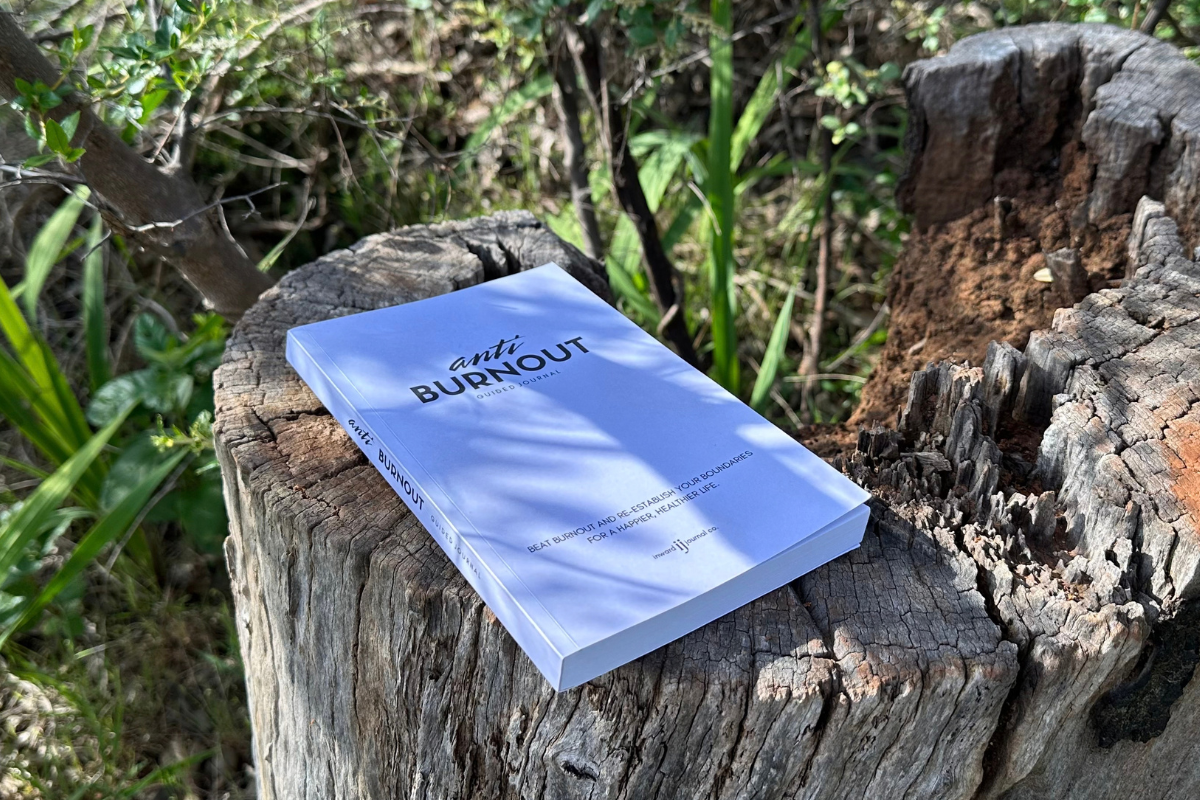
The Anti Burnout - Guided Journal is designed to help you step out of survival mode and begin restoring your energy, clarity, and sense of balance.
For the people who want a reset, not another productivity hack.
This journal helps you:
Understand what’s actually draining you (and why)
Rebuild habits that support you - not exhaust you
Set boundaries that protect your time and energy
Reconnect with what makes you feel like you again
Perfect for anyone looking for a guided burnout recovery journal, self care journal, or mental wellness journal - that is also easy to use.
Isn’t it time your started prioritising yourself?
Personal Growth Doesn't Have to Be Complicated
Personal growth doesn't have to be overwhelming. Discover guided journals designed to help you reduce stress, build self-awareness, and grow intentionally.
Self-improvement often feels overwhelming.
We're told to wake up at 5am, meditate for 30 minutes, create morning routines, read endless self-help books, and somehow completely transform our lives overnight. Personal growth starts to feel like another thing on an already overflowing to-do list.
And when life is already busy, stressful, or emotionally draining, adding more pressure is usually the last thing we need.
What many people are actually searching for isn't another complicated system.
They're looking for something easy. Intentional. Sustainable.
Something that helps them grow without feeling like hard work.
The Problem With Most Personal Growth Advice
The internet is full of advice. Track every habit. Follow strict routines. Download another app. Create the perfect plan.
And honestly - it’s really exhausting.
But growth isn't about doing more. Real growth often starts with creating small moments to slow down and check in with yourself. Because if you're constantly moving, reacting, and surviving, it's easy to lose connection with who you are, what you need, and where you're heading.
That's where simple tools can create powerful change.
Why Journaling Works When Other Methods Feel Overwhelming
Journaling creates space.
Space to reflect. Space to notice patterns. Space to process thoughts you didn't realise you were carrying.
And unlike complicated self-improvement routines, journaling doesn't require perfection.
You don't need experience.
You don't need hours of free time.
You don't need to know exactly what to write.
You simply need a few intentional minutes.
The small actions we repeat consistently often create the biggest shifts over time.
Designed For Growth That Feels Simple
I know what it feels like to struggle with stress, burnout, anxiety, and feeling disconnected from yourself.
I also know how powerful journaling can be when you're given guidance rather than staring at a blank page wondering where to begin.
Each guided journal was designed to make personal growth feel approachable:
Daily guided prompts that remove the guesswork
Intentional reflection questions
Space to build self-awareness
Simple practices designed for real life
A focus on progress rather than perfection
Whether you're learning to manage anxiety, prevent burnout, practice gratitude, reconnect with yourself, or discover your purpose, growth doesn't have to feel overwhelming.
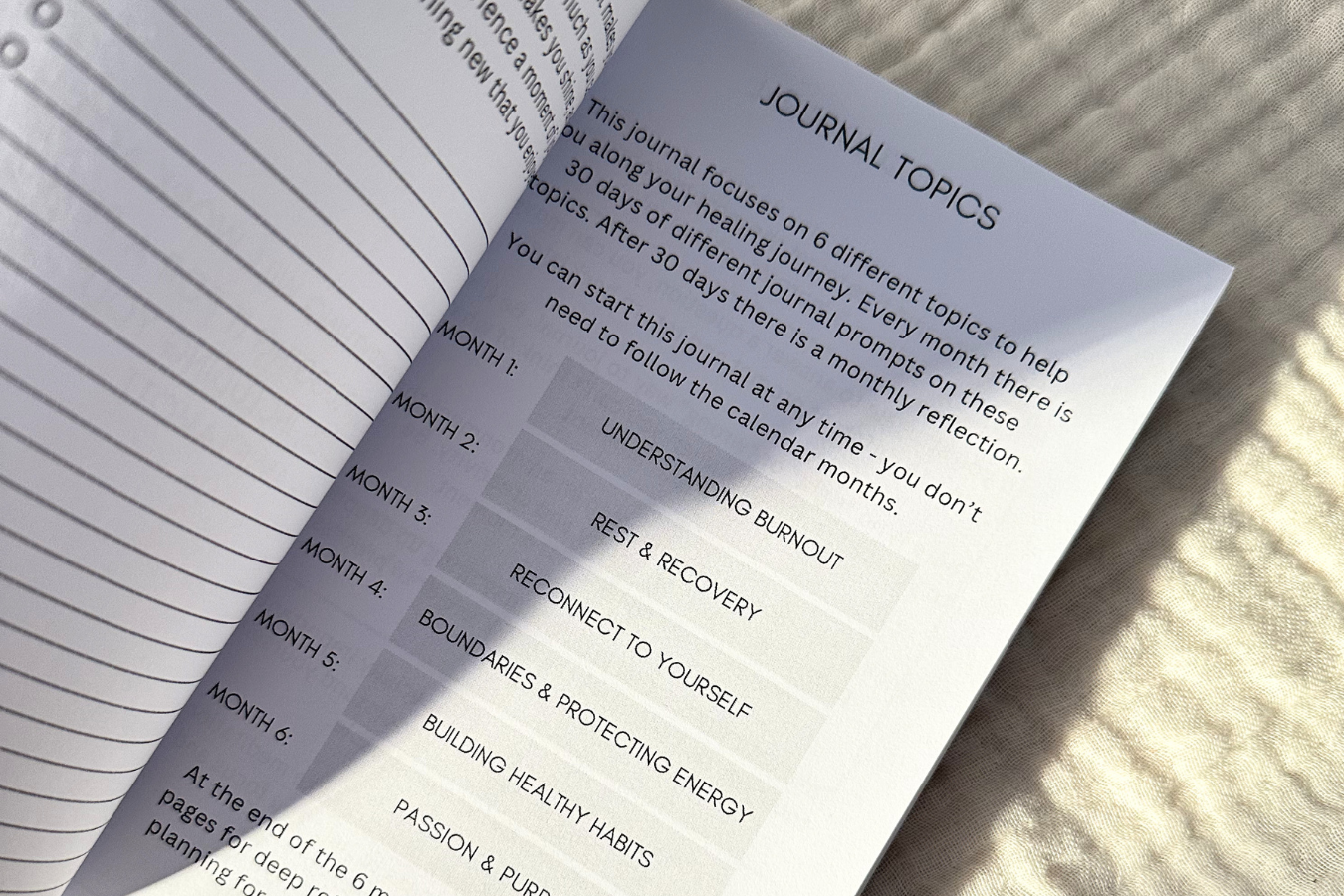
Anti Burnout - Guided Journal is a simple and easy to use guided journal for understanding and healing from burnout, by inward journal co.
What Makes Our Guided Journals So Effective?
Have you ever tried journaling and ended up staring at a blank page?
Maybe you didn’t like it because you found yourself ruminating over your problems - making you feel even worse as a result?
I had that same experience when I started my journaling journey - but I found using prompts so relieving. Having an intentional outcome from my journaling practice, led me to making actual changes in my mindset and ultimately - my life.
So I brought this concept into every journal.
Journal prompts that help challenge your thinking → leading you to seeing different perspectives.
Journal prompts that are structured intentionally → leading you on a journey of growth.
Journal prompts that help you take action → leading you to taking steps in the right direction.
Journal prompts for self discovery → leading you to greater self awareness and appreciation.
Journal prompts for specific outcomes → leading you to heal, grow and make sustainable change.
Years of research, self testing and lived experience have been poured into every journal. Each one containing 180+ prompts - carefully packaged into 6 intentional topics.
If one question is used daily - you have 6 months of guided growth.
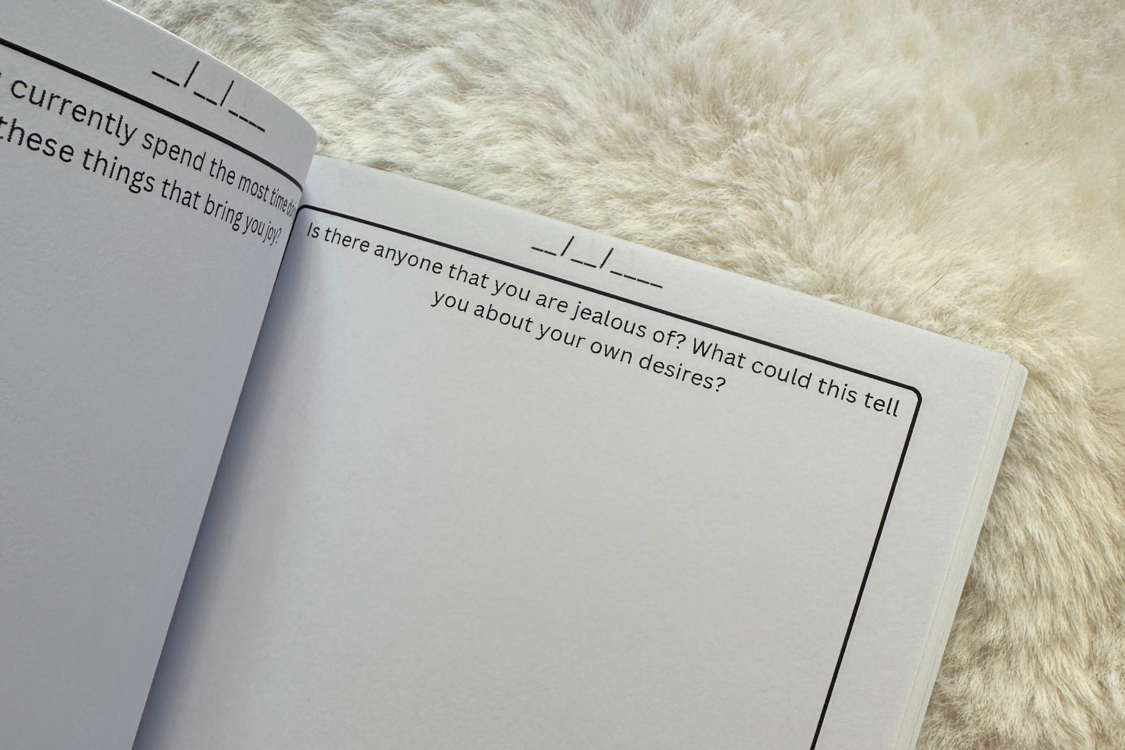
Journal prompts for self discovery, finding yourself and your passions from the Finding Purpose - Guided Journal by inward journal co
Final Thoughts: Small Intentional Actions Create Big Changes
You don't need a complete life reset. You don't need a perfect routine. You don't need to have everything figured out.
Sometimes growth starts with one question, one page, five quiet minutes…
And one small decision to choose yourself today. Because becoming your best self isn't about doing more.
It's about becoming more intentional with the life you're already living.
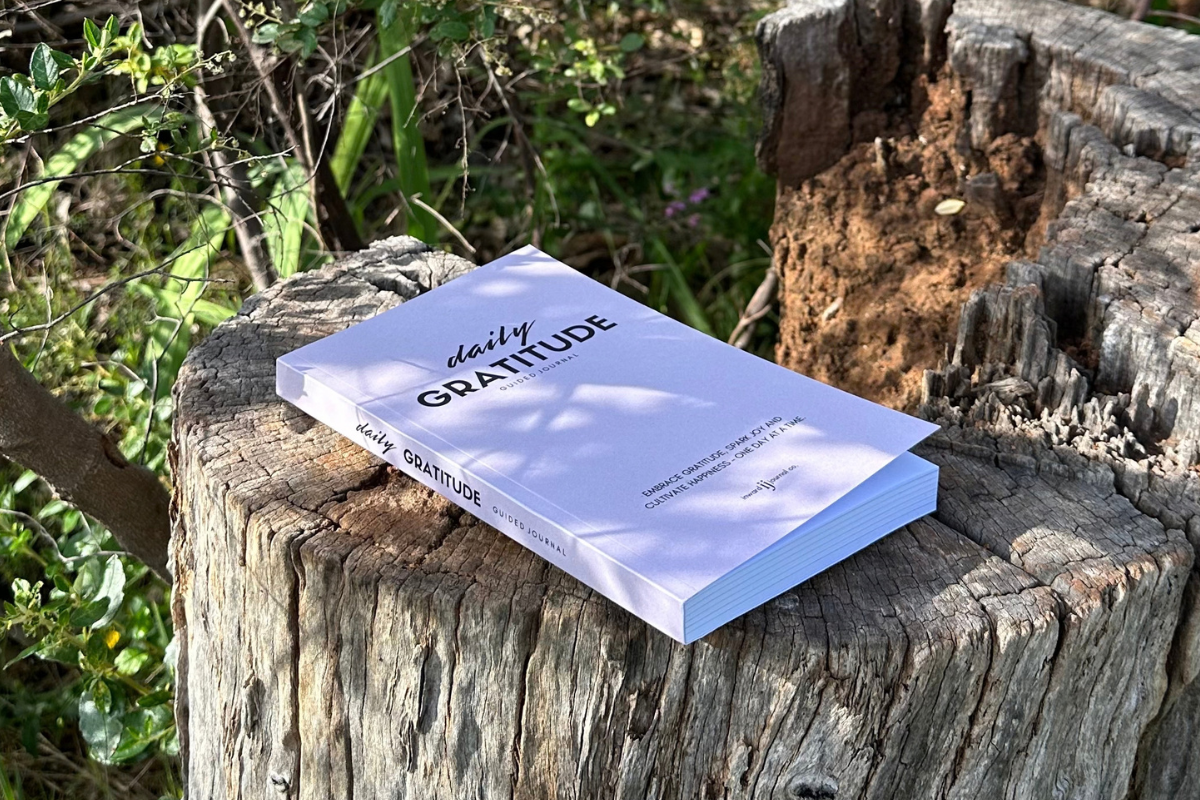
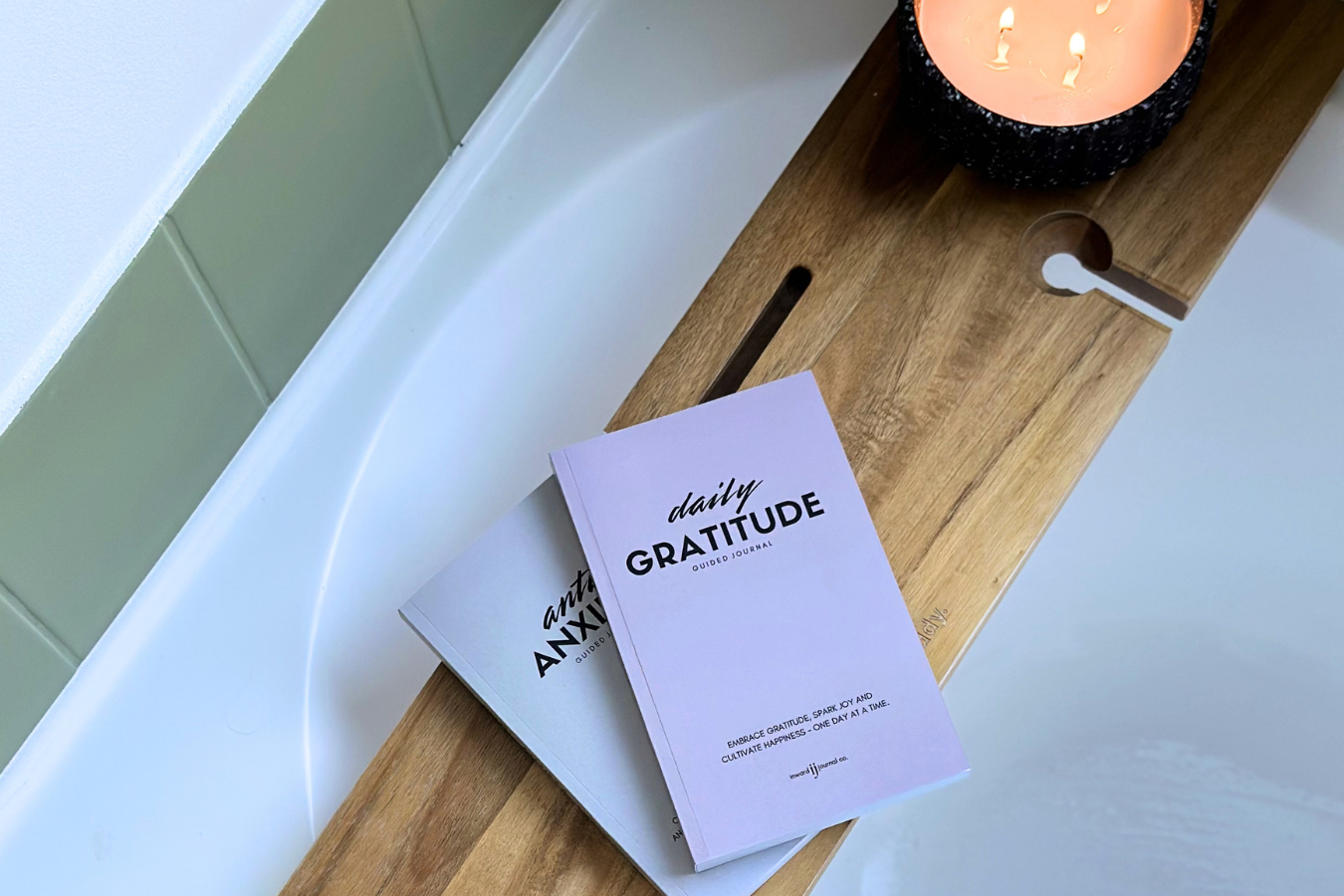
The Daily Gratitude - Guided Journal helps you rewire your brain to be more positive, reconnect with what matters, and create a life that feels purposeful and joyful - in only a few minutes a day.
Notice the positive, appreciate small moments, and cultivate a habit of gratitude that transforms not just your mindset, but your life.
This journal helps you:
Shift from feeling negative, stuck or unhappy to noticing abundance around you
Find joy and meaning in everyday moments
Strengthen relationships and celebrate the people who matter most
Improve your mindset and mental wellbeing
Reduce stress, emotional overwhelm
Perfect for anyone looking for a guided gratitude journal, self care journal, happiness journal or mental wellness journal - that is also easy to use.
Ready to feel happier each day?

Finding Your Purpose: How Ikigai Can Help You Discover Who You Truly Are
Your purpose may not be something you need to find - it may be something you need to remember. Explore how the Japanese concept of Ikigai can guide you back to who you truly are.
Many people spend their lives moving from one responsibility to the next - work, routines, expectations, obligations. Somewhere along the way, they stop asking themselves an important question: Is this actually the life I want?
The truth is that many people never intentionally create a life that feels aligned with who they truly are. Instead, they follow paths chosen by expectations, fear, comfort, or what they think they “should” do. Over time, it can create a feeling of disconnection, restlessness, or wondering if something is missing.
This is where the Japanese concept of Ikigai offers a different approach.
Ikigai helps people reconnect with themselves, discover meaning, and uncover what creates a life that feels fulfilling. Combined with journaling and self-reflection, it can become a powerful tool for self-discovery and personal growth.
Whether you're feeling lost, searching for direction, or wanting to understand yourself on a deeper level, this guide explores how Ikigai can help you find purpose.
What Is Ikigai?
Ikigai is a Japanese concept often translated as "a reason for being."
It sits at the intersection of four important areas:
What you love
What you're good at
What the world needs
What you can be rewarded for
Purpose isn't usually discovered through one dramatic moment.
More often, it unfolds through curiosity, reflection, and understanding yourself more deeply.

Ikigai is a Japanese concept that is used to uncover four key pillars of your life, leading you to your purpose.
Why So Many People Feel Lost or Unsure of Their Purpose
People rarely wake up one day and suddenly feel disconnected, this often happens gradually.
Many people spend years:
Following expectations
Choosing stability over alignment
Ignoring what excites them
Prioritising what others want
Staying busy without asking deeper questions
Forgetting what genuinely lights them up
Eventually, many people reach a point where they ask:
"How did I end up here?"
Not because life is bad. But because it no longer feels fully theirs.
The Truth About Purpose
One of the biggest myths is that purpose is something you either have or don't.
Purpose is not something hidden waiting to magically appear. Purpose is often uncovered.
Through reflection. Through curiosity. Through paying attention.
Through reconnecting with yourself.
Why Journaling Helps You Discover Your Purpose
1. Journaling Helps You Hear Yourself Again
Modern life is noisy. Social media, opinions, responsibilities, expectations, and constant comparison make it difficult to know what you actually want.
Journaling creates space to ask:
What excites me?
What drains me?
What matters to me?
What do I want my life to feel like?
The answers are often already inside you. Journaling simply creates space to hear them.

The answers are usually within you, journaling will help to bring them to light.
2. Journaling Reveals Patterns
Many people overlook clues about themselves.
Writing consistently can reveal:
Activities that energise you
Recurring dreams and interests
Hidden passions
Values that matter most
Habits that disconnect you from yourself
Often purpose leaves patterns before it leaves certainty.
3. Journaling Helps You Reconnect With What Lit You Up Before the World Told You Who to Be
As children, many of us naturally explored what fascinated us.
Then expectations arrived. Responsibilities arrived. Pressure arrived.
Ask yourself:
What did I love doing as a child?
What made me lose track of time?
What did I dream about before fear appeared?
Sometimes purpose isn't found. Sometimes it's remembered.

A journal prompt from the Finding Purpose - Guided Journal by inward journal co
Journal Prompts for Finding Purpose
What makes me feel most alive?
What activities make me lose track of time?
What strengths come naturally to me?
What would I do if I wasn't afraid of judgement?
What impact do I want my life to have?
What does my dream life actually look like?
There are no right answers. Only curiosity.
Our Finding Purpose - Guided Journal has these and other journal prompts in an easy to use, beginner friendly format.
Making starting a journaling practise and finding your true purpose in life, easier than ever.
Personal Growth Starts With Self-Discovery
You cannot intentionally create a meaningful life without understanding yourself first.
Self-discovery is not selfish. It's foundational.
The more you understand yourself, the easier it becomes to create a life that feels aligned instead of automatic.
Final Thoughts: Your Purpose May Be Closer Than You Think
You do not need to have everything figured out. You do not need a five-year plan. You do not need one life-changing breakthrough.
You simply need to start paying attention.
To yourself. To your curiosity. To what lights you up.
One reflection, one question, one journal page at a time.
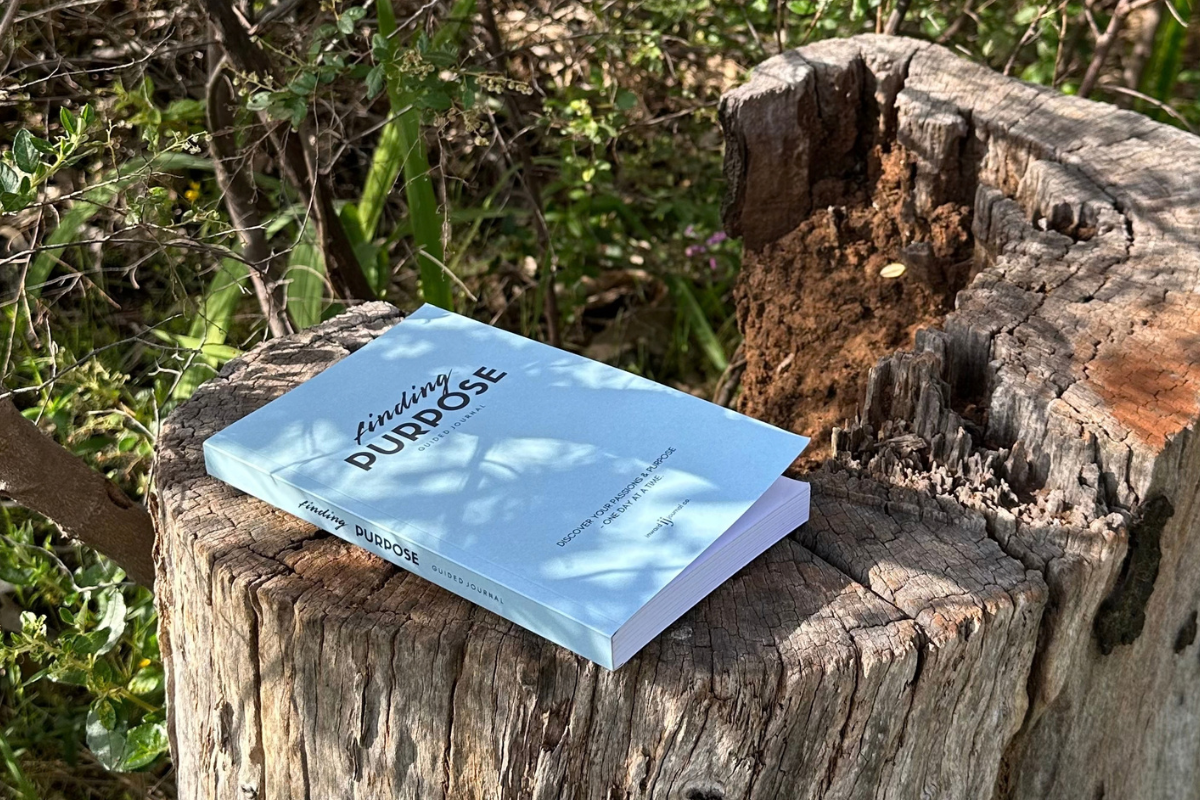
The Finding Purpose - Guided Journal will help you uncover who you truly are and what your life purpose is.
Grounded in the Japanese principle of Ikigai, to help you explore what energises you, what drains you, and how to align your purpose with real-world action - helping you build clarity and confidence through daily journaling, one page at a time.
This journal helps you:
Find your passions, purpose and meaning.
Create a roadmap to step confidently into the life you desire
Discover how to be happier and more fulfilled
Support your mental health through journaling
Switch from emotionally numb to motivated and inspired
Ready to start living a life that feels undeniably yours?
Why Gratitude Journaling Can Change Your Life: Simple Daily Habits for More Happiness and Positivity
What if changing your mindset didn't require a complete life overhaul? Gratitude journaling is a simple daily practice that can help you slow down, shift your focus, and find more joy in everyday moments.
Life can feel busy, overwhelming and filled with constant pressure. It's easy for the mind to focus on stress, problems, and what feels missing - after all the human brain is wired to focus on negatives. Gratitude journaling offers a simple but powerful way to shift your focus and improve your wellbeing. Research and personal experiences continue to show that practicing gratitude can support mental health, reduce stress, and help people notice more joy in everyday life.
Whether you're new to journaling or wondering if gratitude journaling actually works, this guide explains the benefits and how to get started.
What Is Gratitude Journaling?
Gratitude journaling is the practice of intentionally writing down things you appreciate, value, or feel thankful for. They don't have to be huge life-changing moments.
Gratitude can be found in simple things:
A morning coffee
A supportive friend
Sunshine on your walk
A personal achievement
A quiet moment to yourself
The goal isn't pretending life is perfect. It's training your mind to notice what is still good, even during difficult times.
Why Gratitude Journaling Is So Powerful
1. Gratitude Journaling Helps Shift Negative Thinking
Our brains naturally focus on problems and potential threats. This is often called a negativity bias. Gratitude journaling creates a deliberate habit of noticing positive moments too. Over time, this can help balance your perspective and make it easier to recognise good experiences that might otherwise go unnoticed.
2. Gratitude Journaling Can Reduce Stress
Stress often pulls attention toward everything that feels urgent, overwhelming or out of control. Taking a few moments to reflect on positive experiences can create a mental pause. Even during difficult days, identifying small moments of gratitude can provide emotional relief.
3. Gratitude Journaling Supports Mental Wellbeing
Practicing gratitude has been linked to improved emotional wellbeing and increased positive feelings.
Many people notice they become:
More optimistic
More self-aware
More emotionally grounded
More appreciative of everyday moments
Less focused on comparison
Small daily habits can create meaningful change over time - no one has ever regretted starting a gratitude practise!
4. Gratitude Helps You Appreciate the Present Moment
Many people spend their lives thinking about what happened yesterday or worrying about tomorrow. Gratitude journaling gently brings your attention back to the present.
It encourages you to slow down and ask:
What's going well today?
What made me smile?
What do I appreciate right now?
This can help create a stronger sense of presence and mindfulness.
5. Gratitude Journaling Builds a Positive Habit
One of the biggest benefits of gratitude journaling is consistency. Even writing one thing each day creates a habit of looking for positive moments.
Over time, many people begin noticing gratitude naturally throughout the day.

A daily gratitude practise will build a better mindset over time, helping you focus on the right things.
How to Start a Gratitude Journal
Many people think gratitude journaling means writing long entries every day. It doesn't.
Start simple.
Write:
Three things you're grateful for
One positive moment from today
One person you appreciate
One thing you love about yourself
There are no rules - consistency matters more than perfection.
Gratitude Journal Prompts
If you struggle with knowing what to write, prompts can make the process easier.
Try:
Morning gratitude prompts:
What am I looking forward to today?
What opportunity am I grateful for?
What strength do I appreciate about myself?
Evening gratitude prompts:
What made me smile today?
What went better than expected?
Who positively impacted my day?
Prompt-based gratitude journals can help create structure and remove pressure, that’s why we created the Daily Gratitude - Guided Journal with 180 journal prompts throughout. Our journal helps you rewire your brain for positivity and abundance, with monthly themes and a new question each day.
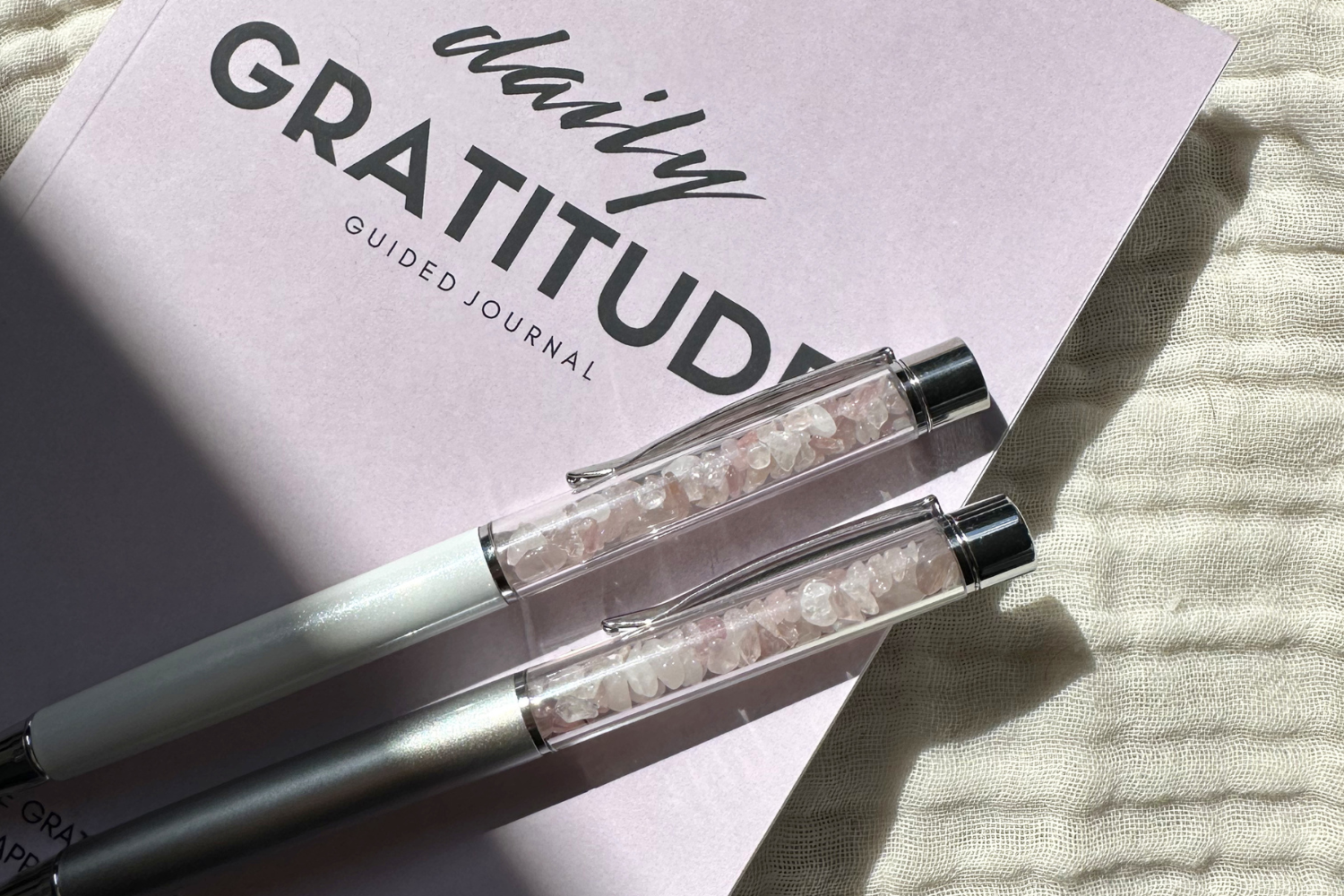
Daily Gratitude - Guided Journal - a simple, effective gratitude journal to start your new gratitude practice,
Why Gratitude Journaling Can Feel Difficult at First
Some people worry gratitude journaling feels forced or fake. That's completely normal.
On difficult days, gratitude may look smaller:
A comfortable bed
A pet beside you
Fresh air
Getting through the day
Gratitude is not about ignoring hard things. It's about recognising that difficult moments and good moments can exist together.
Final Thoughts: Why Gratitude Journaling Is Worth Trying
Gratitude journaling isn't about becoming positive all the time. It's about slowing down enough to notice what already exists in your life. One small moment. One small reflection. One page at a time.
Over time, those small moments can create meaningful shifts in how you think, feel, and experience your day.
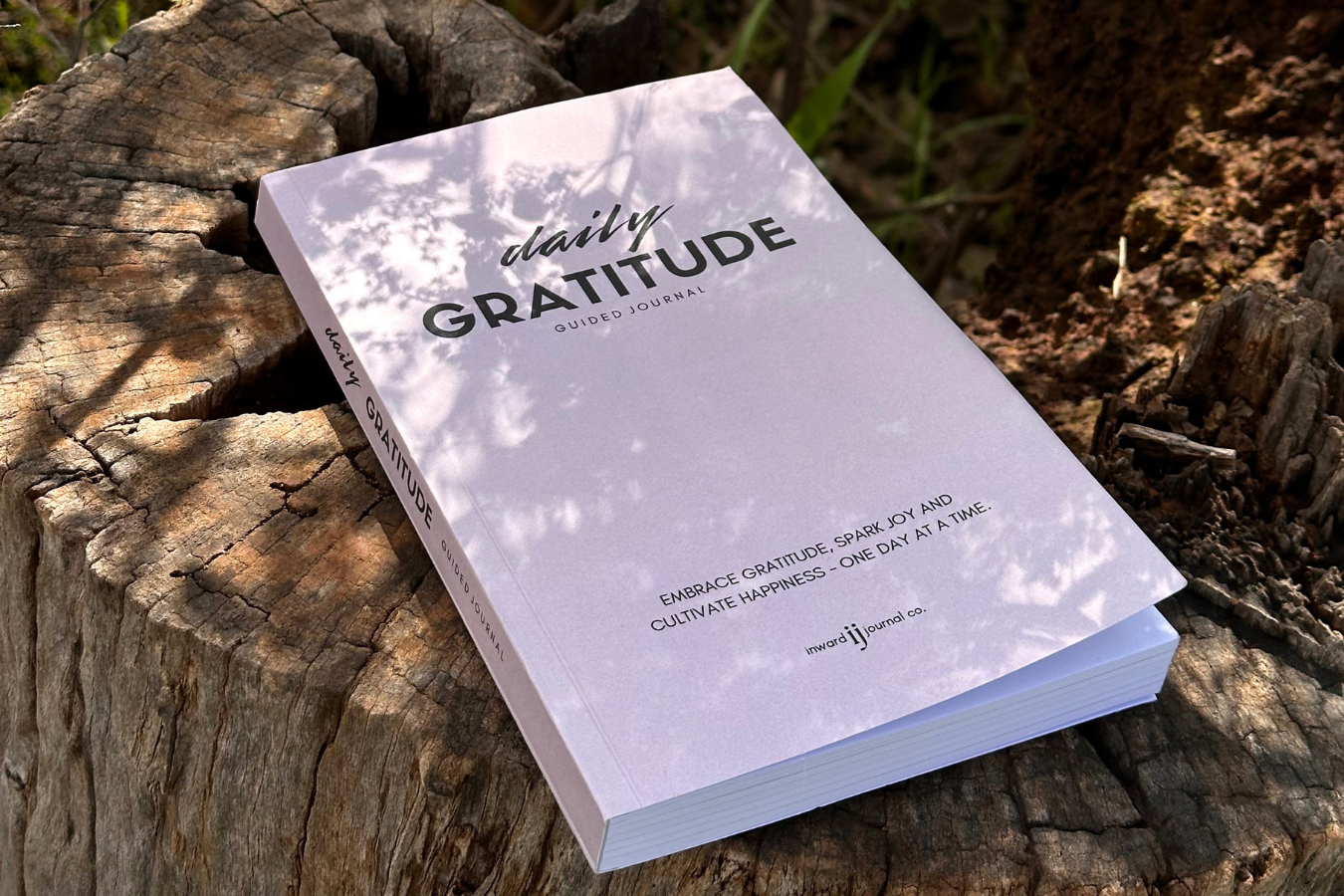
The Daily Gratitude - Guided Journal helps you rewire your brain to be more positive, reconnect with what matters, and create a life that feels purposeful and joyful - in only a few minutes a day.
Notice the positive, appreciate small moments, and cultivate a habit of gratitude that transforms not just your mindset, but your life.
This journal helps you:
Shift from feeling negative, stuck or unhappy to noticing abundance around you
Find joy and meaning in everyday moments
Strengthen relationships and celebrate the people who matter most
Improve your mindset and mental wellbeing
Reduce stress, emotional overwhelm
Perfect for anyone looking for a guided gratitude journal, self care journal, happiness journal or mental wellness journal - that is also easy to use.
Ready to feel happier each day?

Why Journaling Is So Good for Anxiety: A Simple Practice That Can Calm an Overthinking Mind
Can journaling really help anxiety? Discover how journaling reduces overthinking, helps manage stress, uncovers triggers, and supports emotional wellbeing with simple techniques and anxiety journal prompts
Feeling anxious can feel like carrying around hundreds of thoughts at once - racing worries, worst-case scenarios, stress, and mental exhaustion. If you've ever felt trapped inside your own thoughts, journaling may be one of the simplest and most powerful tools to help. Research and personal experience continue to show that journaling for anxiety can reduce stress, improve emotional awareness, and help people regain a sense of control over their thoughts.
Whether you're new to journaling or wondering if it actually helps anxiety, this guide explains why journaling works and how to start.
What Is Anxiety?
Anxiety is more than occasional stress or nervousness. It often feels like persistent worry, overthinking, physical tension, fear about the future, or a mind that struggles to switch off.
Common anxiety symptoms can include:
Racing thoughts
Constant overthinking
Trouble sleeping
Feeling overwhelmed
Difficulty focusing
Increased stress levels
Physical symptoms like a racing heart or tension
Many people try to cope by pushing their thoughts away. The problem is that unprocessed thoughts often become louder.
Journaling creates a space to slow down and release those thoughts.

Anxiety can make you feel like you’re drowning…but there are ways to help yourself swim.
Why Journaling Helps Anxiety
1. Journaling Gets Thoughts Out of Your Head
An anxious mind often feels cluttered. Thoughts repeat themselves because your brain keeps trying to solve or remember them. Writing your thoughts down creates distance between you and the anxiety. Instead of carrying every thought mentally, you place it somewhere tangible.
Many people describe this as feeling like they can finally "breathe" after writing.
2. Journaling Helps Identify Anxiety Triggers
Anxiety can sometimes feel random, but patterns often exist.
When you journal consistently, you may start noticing:
Situations that increase stress
Certain people or environments affecting your mood
Thought patterns that repeatedly appear
Habits that worsen anxiety
Recognizing triggers is an important first step toward managing anxiety.
3. Journaling Slows Down Overthinking
Overthinking often causes thoughts to move rapidly and feel overwhelming. Writing naturally forces you to slow down, especially as your hand writes slower than your brain can think of the words. You move from chaotic mental loops into structured sentences. That small shift can create clarity and help separate realistic concerns from anxious thinking.
4. Journaling Builds Self-Awareness
People often spend years reacting to anxiety without fully understanding it. Journaling creates a habit of checking in with yourself.
Questions like:
What am I feeling right now?
What caused this feeling?
What do I need today?
can build stronger emotional awareness over time. The more you understand yourself, the easier it becomes to support yourself.
The journal prompts for anxiety can vary a lot - some help you manage anxiety in the moment, while others challenge your thinking and help you reframe your thoughts, like the one below from our Anti Anxiety - Guided Journal
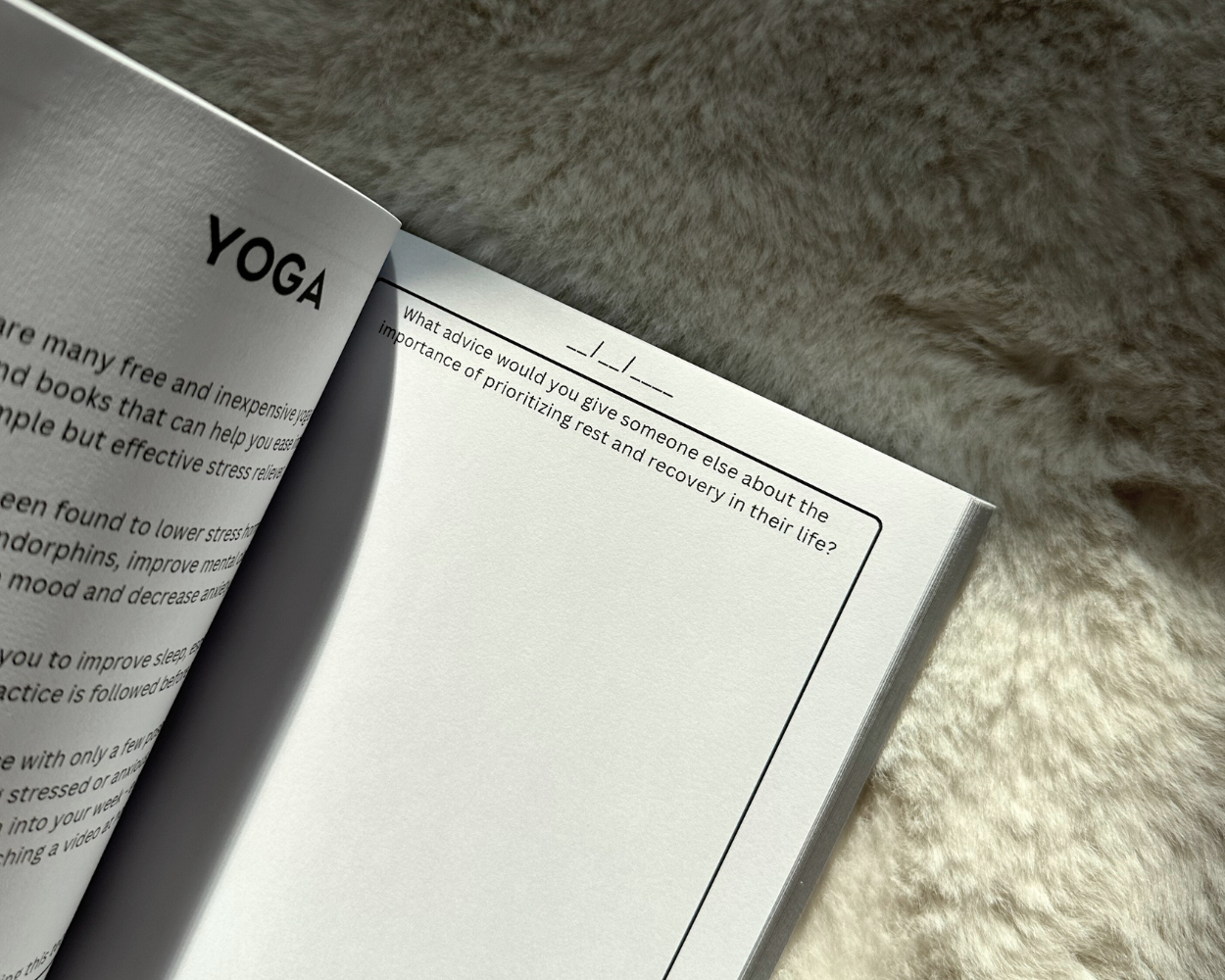
One of the 180 daily journal prompts from Anti Anxiety - Guided Journal by inward journal co.
5. Journaling Can Reduce Stress Levels
Stress and anxiety often work together. Writing about emotions has been shown to help process difficult experiences and reduce emotional pressure. Even spending five minutes journaling each day can create a sense of release.
Journaling dosen’t need to be perfect. The goal isn't writing beautifully - it's expressing honestly.
How to Start Journaling for Anxiety
Many people avoid journaling because they think they need to write pages and pages every day to see results - you don't. Others find staring at a blank page to be overwhelming, struggling to find something to write.
That’s why we created the Anti Anxiety - Guided Journal. A simple, easy to use guided journal with over 180 prompts to help you work through your anxiety triggers and find calm and clarity amongst the chaos of every day life.
However you choose to journal, consistency matters more than paragraph length.
Final Thoughts: Why Journaling for Anxiety Works
Anxiety often makes thoughts feel louder, faster, and heavier. Journaling creates a pause. It gives your thoughts somewhere to go. It helps uncover patterns, process emotions, reduce overwhelm, and reconnect with yourself.
You do not need to be a writer.
You do not need to know exactly what to say.
You simply need a place to begin.
One page, one thought, one prompt at a time.
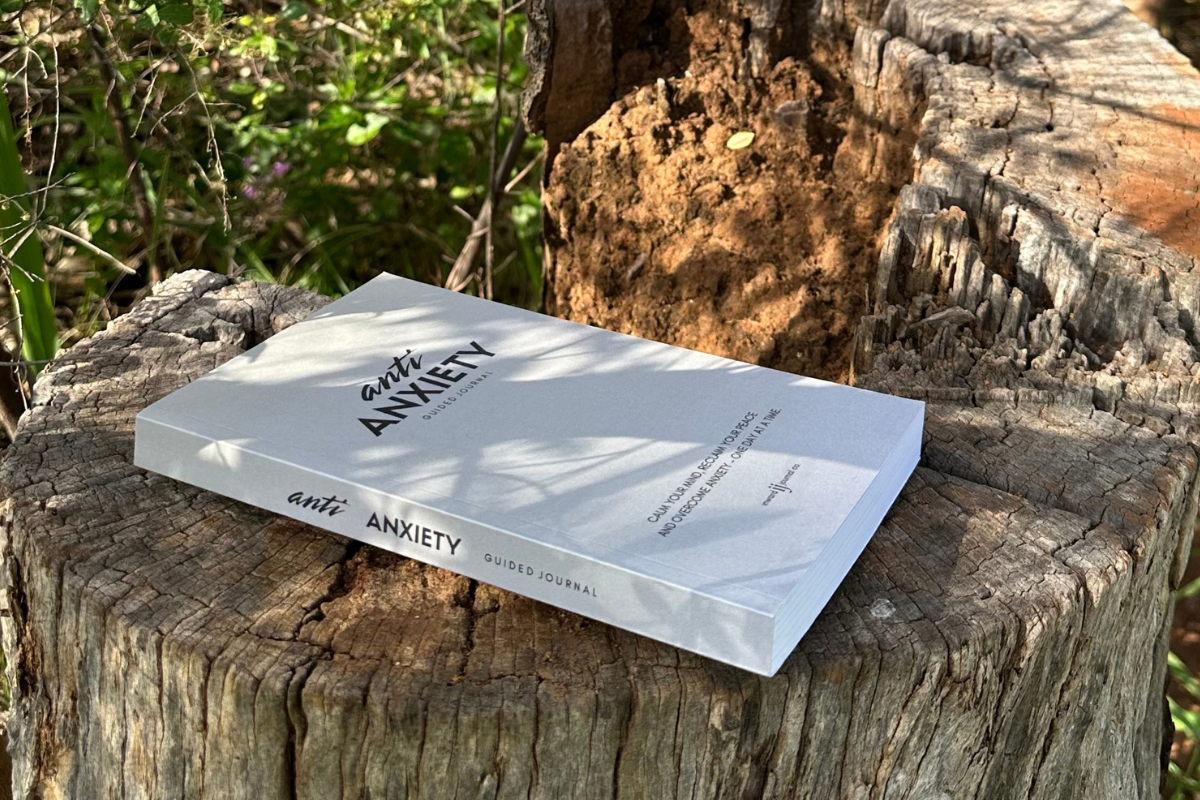
The Anti Anxiety – Guided Journal is designed to help you understand your anxiety, recognise your triggers, and respond to your thoughts with greater calm, clarity, and self-compassion through effective daily journal prompts.
This journal helps you:
Identify what triggers your anxiety and how to reduce overwhelm
Reframe anxious thought patterns and stop spiraling thoughts
Reduce overwhelm and create supportive daily habits
Develop boundaries that protect your energy and wellbeing
Support your mental health through a journaling habit
Stop ruminating and overthinking, and start growing
Perfect for anyone looking for a guided anxiety relief journal, self care journal, or mental wellness journal - that is also easy to use.
Ready for a calmer, happier and more fulfilling life?
Reconnecting With Your Authentic Self: How to Stop People-Pleasing and Rediscover What Lights You Up
You were never meant to spend your life becoming who everyone else wanted you to be. Explore how self-reflection and journaling can help you reconnect with the most authentic version of yourself.
Many people spend years becoming who they think they should be. We learn to keep the peace, meet expectations, avoid disappointing others and fit into roles that make people comfortable. Over time, it can become difficult to answer a simple question: Who am I when I’m not trying to please everyone else?
If you've ever felt disconnected from yourself, constantly put others first, or struggled to identify what genuinely makes you happy, you're not alone. Reconnecting with your authentic self is a journey - and journaling can become one of the most powerful tools to help you get there.
Whether you're beginning a self-discovery journey or looking to break people-pleasing habits, this guide explores authenticity, why disconnection happens, and how journaling can help you reconnect with yourself.
What Does It Mean to Be Your Authentic Self?
Being authentic doesn't mean being perfect, confident, or having everything figured out.
Authenticity means living in a way that feels aligned with who you truly are - your values, interests, needs, emotions and desires.
Your authentic self is the version of you that exists underneath:
People-pleasing habits
Fear of judgement
Outside expectations
Pressure to fit in
Constant comparison
The need for approval
When you reconnect with your authentic self, you begin making choices based on what feels true for you instead of what others expect from you.
Why So Many People Feel Disconnected From Themselves
Disconnection rarely happens overnight. Many people learn early that being accepted sometimes feels safer than being fully themselves.
You may have learned to:
Prioritise everyone else's needs
Avoid conflict
Seek validation from others
Ignore your own feelings
Say yes when you wanted to say no
Shrink parts of yourself to feel accepted
Over time, people-pleasing can become automatic.
The problem is that constantly focusing on everyone else can create distance between you and yourself.

People pleasing may seem harmless at first, but putting other people’s needs and wants before your own is how disconnection hapens.
Signs You May Be Stuck in People-Pleasing Patterns
People-pleasing often looks helpful on the outside but exhausting on the inside.
Some common signs include:
Feeling responsible for everyone else's happiness
Difficulty setting boundaries
Feeling guilty saying no
Constantly worrying what others think
Struggling to identify your own needs
Feeling burnt out or resentful
Changing yourself depending on who you're around
Recognising these patterns is not about judgement. It's about awareness.
And awareness is what creates change.
Why Journaling Helps You Reconnect With Yourself
1. Journaling Creates Space to Hear Your Own Voice
When life feels noisy, it becomes difficult to know what you actually think and feel. Journaling creates a pause. Instead of responding to everyone else, you create time to really tune in and ask yourself important questions.
Who am I really? What masks do I wear? What ways do I shrink myself to be accepted?
Over time, your own voice becomes easier to hear.
2. Journaling Helps You Identify Hidden Patterns
Many people-pleasing behaviors happen automatically and writing regularly can reveal patterns you may not have noticed before.
You might begin recognising:
Situations where you abandon your needs
Relationships that drain your energy
Beliefs you carry from childhood
Areas where fear influences your decisions
Awareness often becomes the first step toward change.
3. Journaling Helps You Rediscover What Lights You Up
Many people become so focused on responsibilities and expectations that they forget what they genuinely enjoy.
Reconnect with curiosity by asking:
What made me feel alive as a child?
What activities make me lose track of time?
What excites me?
What energises me?
Authenticity isn't always about finding something new. Sometimes it's remembering what was already there.
4. Journaling Builds Self-Trust
People-pleasing often teaches us to look outside ourselves for answers. Journaling creates a habit of checking in with yourself first. The more often you listen to your own thoughts, needs, and emotions, the more self-trust you begin building.
Journaling doesn’t need to be difficult either, you can easily start in only a few minutes a day with a guided journal.
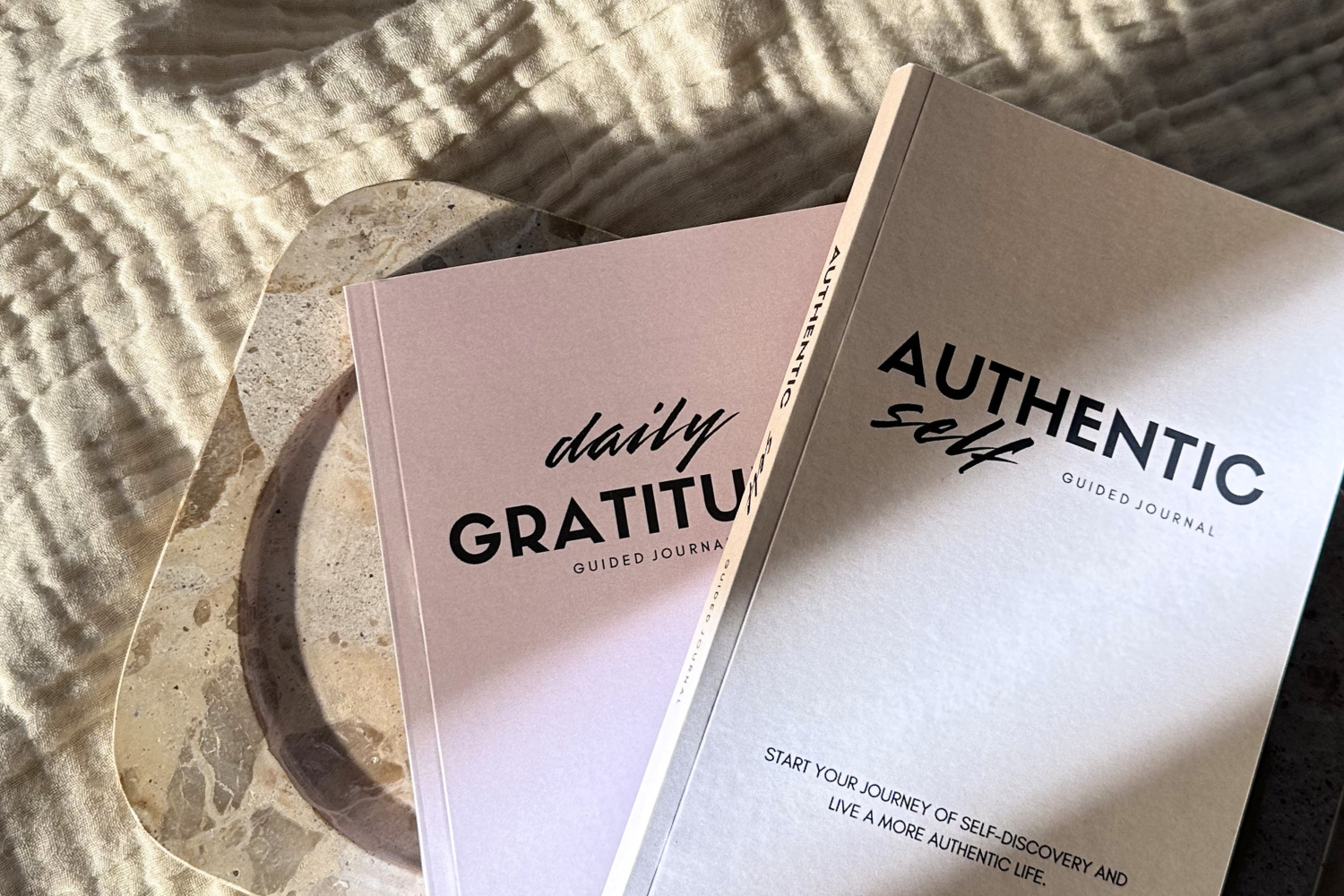
That’s why we created the Authentic Self - Guided Journal, to help people reconnect to themselves, rediscover joy and meaning, and challenge people pleasing behaviours.
Journal Prompts to Reconnect With Your Authentic Self
If you're unsure where to begin, prompts can help guide reflection.
Try:
Who am I outside of my responsibilities and roles?
What parts of myself do I hide around others?
What makes me feel most like myself?
What am I saying yes to that I actually want to say no to?
There are no right answers. The goal is curiosity, not perfection.
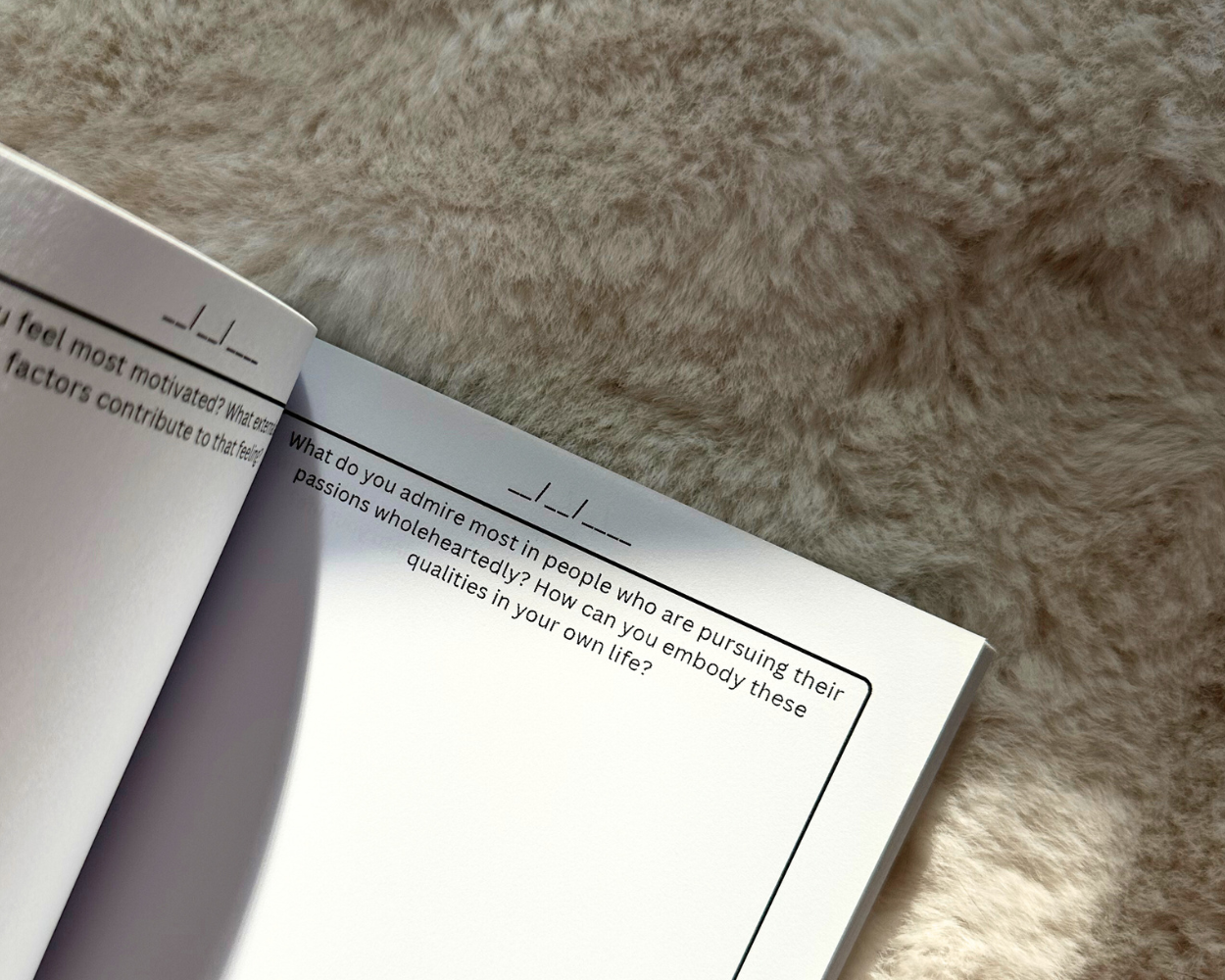
A journal prompt from the Authentic Self - Guided Journal that focuses on authenticity.
Breaking Free From People-Pleasing Takes Time
People-pleasing patterns often develop over years. You do not need to change overnight.
Small shifts matter:
Setting one boundary
Expressing one honest opinion
Saying no without overexplaining
Prioritizing your own needs occasionally
Choosing yourself without guilt
Authenticity is built in small moments.
Final Thoughts: Reconnecting With Yourself One Page at a Time
You were never meant to spend your entire life becoming who everyone else wanted you to be.Underneath expectations, pressure, and people-pleasing habits, you still exist. Journaling gives you space to come back to yourself.
One question. One reflection. One honest page at a time.